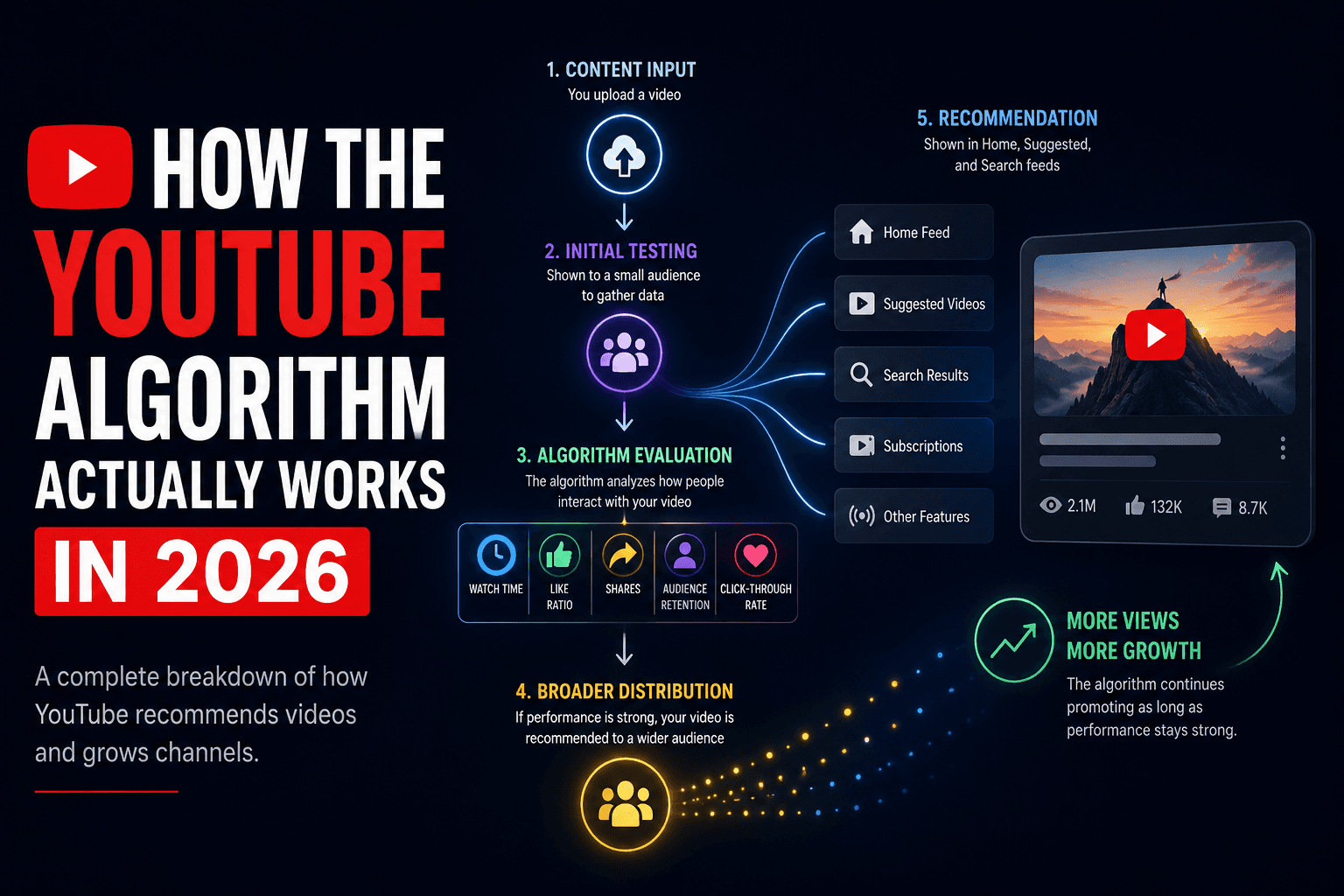
YouTube's algorithm is not one algorithm — it's a family of ranking models, each tuned for a surface (Home, Search, Suggested, Shorts). Understanding which surface feeds which outcome is the difference between a video that dies and one that compounds. A video can flop on Home and still go viral through Suggested; a video can rank #1 in Search and never break out of it. Knowing which surface you're optimizing for shapes every decision from title length to thumbnail style to video length.
The Signals That Matter in 2026
Watch time and satisfaction (measured via retention curves and post-view surveys) still dominate. CTR is the entry gate — if the thumbnail and title don't earn the click, no other signal gets a chance to fire. Session time, meaning how long a viewer stays on YouTube after watching your video, has grown as a signal, which is why strong end-screen recommendations and a satisfying payoff now matter. YouTube rewards videos that send viewers to more videos.
Underneath those, the algorithm weighs early velocity (the first 24–48 hours of CTR and retention relative to your channel's baseline), audience match (does this video fit the people who already watch you?), and novelty (is it a fresh angle, or a retread of something that already exists?). None of these live in isolation — they're combined into a predicted-satisfaction score that determines how wide a test audience your video gets.
What Stopped Mattering
Upload frequency, raw subscriber count, and keyword tag stuffing matter far less than creators assume. A 10K-sub channel with a perfectly matched video can outperform a 1M-sub channel that posts the wrong thing. Subscriber count is a lagging indicator of past performance, not a ranking boost for new uploads — which is why established channels still flop and small channels still break out.
How to Align With It
Align by front-loading the signals you control: a clickable, topic-matched title and thumbnail to win CTR; a tight 15-second hook to defend early retention; a satisfying payoff that earns watch time; and a relevant end screen that keeps viewers in session. Do that on every upload and the algorithm's predicted-satisfaction score moves in your favor, widening your initial test audience with each release.
AI titles, SEO audits, thumbnails, and channel analytics — all in one place.